
Loading...
Stop watching your yard wash downhill every spring. We build concrete retaining walls that handle Lafayette clay soil, deep frost lines, and decades of Indiana weather.
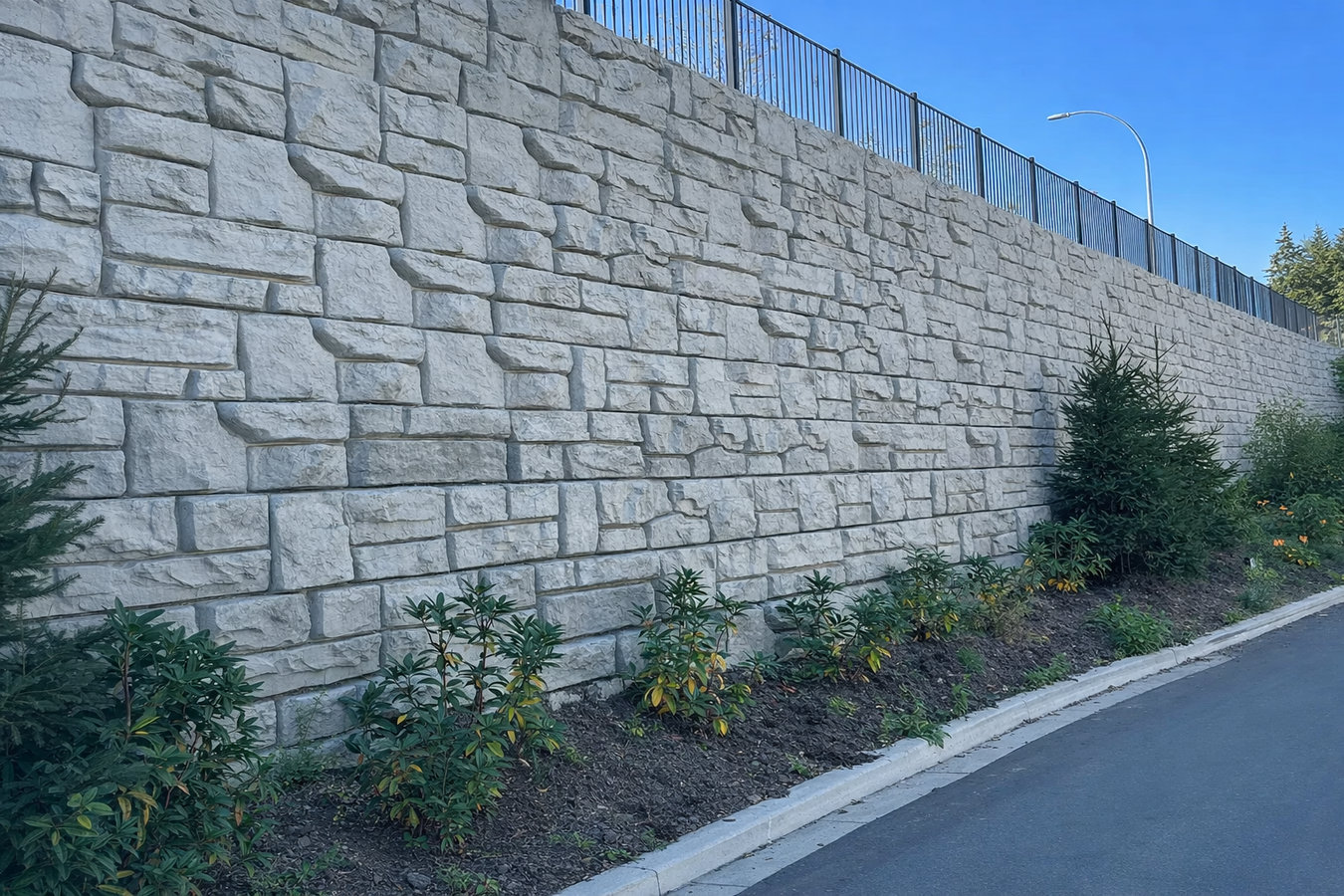
Concrete retaining walls in Lafayette hold back soil so it stays in place instead of washing downhill - most jobs take two to five days from start to finish depending on wall height and site conditions.
If you have a sloped yard, an eroding hillside, or an aging block wall that has started to lean, a properly built concrete wall stops the problem for good. Many Lafayette homeowners pair a new wall with concrete floor installation when finishing out a basement or lower level that sits below grade. A wall done right is something you stop thinking about - it just works, season after season.
After Lafayette snowmelt and spring rains, you notice soil moving downhill, bare patches forming on a slope, or mulch collecting at the bottom of a grade. This is erosion in action, and it tends to get worse each year. A concrete wall stops the cycle and gives you back a yard you can actually use.
If an older concrete or block wall has started to tilt away from the slope, shows horizontal cracks, or has gaps where sections have pulled apart, those are signs the wall is under stress it can no longer handle. In Lafayette clay-heavy soil, that kind of movement tends to accelerate once it starts. Getting it evaluated before it fails completely is almost always cheaper.
When a slope sends water toward your home instead of away from it, you may notice wet spots in your basement, water staining on foundation walls, or soggy ground that never fully dries out. A retaining wall, properly placed and drained, can redirect that water flow and protect your foundation from long-term damage.
If part of your yard is too steep to mow safely, too unstable for kids to play on, or sitting unused because it is impractical, a retaining wall can turn that slope into a flat, usable terrace. Many Lafayette homeowners use walls to create garden beds, patios, or level lawn areas where there used to be a hazard.
We build poured concrete retaining walls for residential and light-commercial properties across the Lafayette area. Every wall starts with a footing dug below the frost line - roughly 30 inches in Tippecanoe County - so freeze-thaw cycles do not push it out of alignment over the years. We also install gravel backfill and drainage pipe behind every wall so water has a place to go instead of building pressure against the concrete. If you are not sure whether your slope needs a short garden wall or a taller structural wall, we will come out, look at the site, and give you an honest recommendation.
For yards that need more than a wall, we often combine retaining work with concrete footings for an adjacent structure or with complementary landscaping preparation. Many of our customers also ask about decorative options - stamped faces, exposed aggregate, or smooth-troweled finishes - that make the wall blend with the rest of the yard rather than looking purely utilitarian.
Best for homeowners who need maximum strength and longevity on steep or high-load slopes.
Suited for shorter slopes, raised bed borders, and yard leveling where a smaller wall is enough.
Ideal for wide slopes where a single tall wall would be cost-prohibitive - multiple shorter walls create usable flat areas.
For homeowners who want the wall to look like a yard feature, not just a structural fix.
Built with gravel backfill and perforated pipe for properties where standing water is a recurring problem.
Lafayette sits in a climate zone where temperatures drop below freezing and then warm back up - sometimes multiple times in a single week during late fall and early spring. Every time water in the soil freezes, it expands and pushes against anything in its way, including retaining walls. Much of the area also sits on dense clay-heavy soils left behind by glacial activity. Clay holds water instead of letting it drain, which means it gets heavier and expands when wet, putting significantly more pressure on a wall than sandy soil would. Both of those conditions require a wall that is built specifically for this area - not a generic installation that ignores local soil and climate.
A significant number of homes in Lafayette were built in the mid-20th century, and many sit on sloped lots with aging landscape features. If your home is in an established neighborhood like those near West Lafayette or in older subdivisions closer to Frankfort, there is a real chance an existing wall is nearing the end of its useful life and worth having a contractor evaluate before it fails. Spring is when problems become visible - new cracks, leaning sections, and erosion at the base are all signs that should not be ignored.
We respond within one business day. We will ask a few questions about your slope, what you are trying to accomplish, and whether there is an existing wall involved.
We come out to see the site in person - no reputable contractor should quote a retaining wall without seeing the slope and soil firsthand. After the visit you receive a written estimate with no surprises.
We handle the City of Lafayette permit application. The crew digs below the 30-inch frost line, pours the footing, and installs the drainage system behind the wall - the most critical steps that are invisible once the job is done.
The wall is formed and poured, backfill goes in, and the site is graded and cleaned. We walk you through the curing period - typically one week to working strength and 28 days to full strength - before we leave.
Free estimate, no pressure. We respond within one business day.
(765) 637-2109Every wall we build has a footing that goes below the frost line for Tippecanoe County - roughly 30 inches - so the freeze-thaw cycle does not push it out of alignment over the years. This is the single biggest reason retaining walls fail early, and it is non-negotiable on our jobs.
We install gravel backfill and perforated drainage pipe behind every wall we build. You cannot check this after the backfill goes in, which is exactly why we make it part of every job rather than an optional upgrade. A wall that traps water will eventually fail - ours are built so that does not happen.
We handle the City of Lafayette building permit application, coordinate any required inspections, and keep the project moving. You do not need to make a single call to the Building Department. For homes in permitted project areas - especially those near campus or in older established neighborhoods - this matters for your home sale paperwork too.
Tippecanoe County clay-heavy soil is not the same as what contractors in drier or sandier regions deal with. We size wall footings and drainage systems specifically for local conditions, which is why our walls hold up through wet springs and hard winters instead of starting to lean within a decade.
The combination of below-frost-line footings, proper drainage, and knowledge of local clay soil is what separates a wall that lasts 50 years from one that starts failing after the first hard winter. That is the standard we hold every job to - and it is something you can ask us about directly before you sign anything.
Learn more from the Portland Cement Association and the City of Lafayette Building Department on permit requirements.
Pair a new retaining wall with a properly installed concrete floor for basements or lower-level spaces that sit below grade.
Learn moreWhen your retaining wall project also involves a structure nearby, properly poured footings are the foundation that holds everything in place.
Learn moreEvery Lafayette winter and wet spring does more damage to an unprotected slope. Reach out today and we will come take a look - no cost, no pressure.