
Loading...
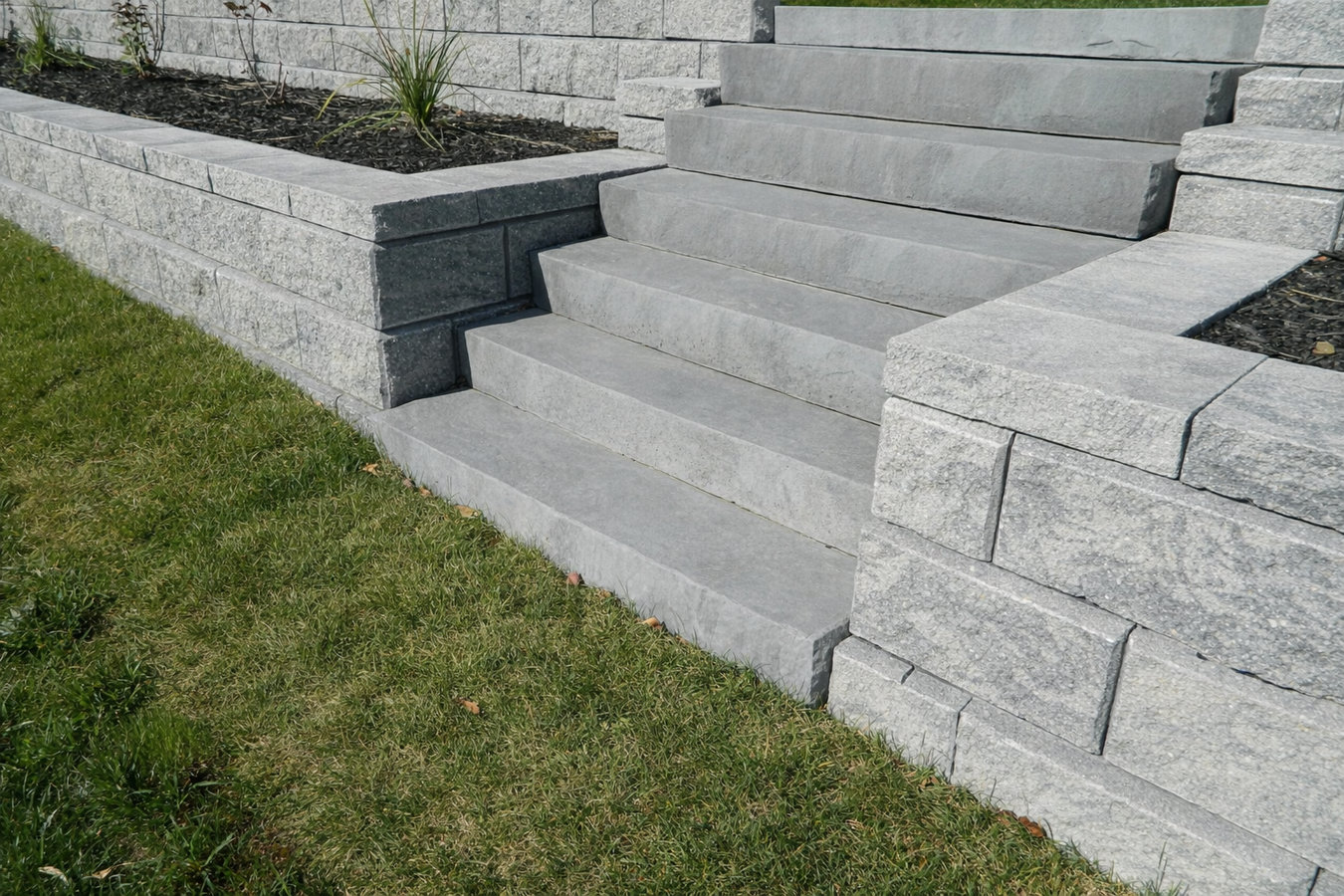
Old, cracked, or tilting steps are a safety hazard and a first impression problem. We build concrete steps that hold up through Indiana winters and look right for your home.
Concrete steps construction in Lafayette covers removing your old steps, preparing the ground underneath, building the forms, and pouring a new set of steps - most residential front entry jobs take one to two days of active work, with a curing period before normal use.
Lafayette has a large number of homes built between the 1920s and the 1970s, and many of them have original concrete steps that are overdue for replacement. If your home is in that age range, you are almost certainly replacing steps rather than adding new ones - which sometimes involves extra work to remove the old structure and address soil settling underneath. If you are also dealing with a cracked or uneven concrete sidewalk leading up to your entry, that work can be combined into one project.
The City of Lafayette Building Division requires permits for exterior concrete work attached to your home. A contractor who pulls the permit before starting protects you - an inspector checks the finished work, and there is nothing to disclose or fix when you sell.
These are the warning signs that mean repair is no longer the right answer.
If you can see cracks wider than a hairline, or chunks are breaking away from the corners and edges, the concrete has been compromised by years of freeze-thaw stress. In Lafayette's climate, this kind of damage accelerates quickly once it starts. What looks cosmetic today can become a safety hazard within one or two more winters.
If the whole flight seems to lean away from the house, or one step sits noticeably lower than the one before it, the soil underneath has shifted. This is especially common in Lafayette's clay-heavy ground. Tilted steps are a tripping hazard and will not self-correct - the movement underneath will continue.
A growing gap where your steps meet the foundation or front stoop means the steps are pulling away from the structure. That gap lets water in, which speeds up damage to both the steps and the foundation behind them. It is a sign the steps need to be rebuilt, not patched.
If your steps feel slick every time it rains, the surface texture has worn away. Original steps on older Lafayette homes often had a broom finish that decades of foot traffic and deicing salt have smoothed down. A slippery front entry is one of the most common causes of fall injuries at home.
We build front entry steps, side entry steps, backyard steps, and steps connecting different grade levels on a property. Each project starts with removing the old structure and properly preparing the base - compacted gravel underneath the pour is what keeps steps from tilting in Lafayette's clay-heavy soil. We pair steps projects with slab foundation building work when homeowners are making broader structural improvements, and with concrete sidewalk building when the path leading to the steps also needs attention.
Surface finish options include a standard broom finish - which gives you grip without being rough on shoes - and stamped or decorative finishes for homeowners who want the steps to complement a renovated entry or a specific home style. We also seal every set of steps before the first winter, which is especially important for new concrete in Lafayette where freeze-thaw cycles and deicing products both attack the surface.
The most common project - suited for homeowners replacing aging or damaged steps at the main entrance, with permit handling included.
Good for homes with grade changes in the backyard or side yard that need safe, permanent access points to different levels.
For homeowners renovating a front entry who want steps that match a new patio, porch, or landscaping design rather than a plain gray slab.
Suits homes where the existing landing at the top or bottom of the steps is also damaged and needs to be poured as part of the same project.
Lafayette sits in a climate zone where temperatures swing above and below freezing throughout fall and spring, and winters can be severe. Concrete poured too late in the season can freeze before it fully hardens, which causes cracking from the inside out. Most contractors in the area schedule pours between late April and mid-October. If your steps are failing right now and it is already late fall, a temporary fix to get through winter is often the smarter call - then plan the replacement for spring.
The clay-heavy soils in Tippecanoe County expand when wet and shrink when dry, putting stress on concrete over the years. This is especially relevant for homes in older parts of Lafayette near Purdue University and in neighborhoods like Ellsworth and Linwood, where steps may have been poured 50 to 80 years ago. Homeowners in Kokomo and Crawfordsville face similar soil and climate conditions. Getting the base preparation right the first time is what prevents the next set of steps from tilting within a few years.
We come out to see your steps before giving you a price - site conditions matter too much to quote accurately over the phone. You get a written estimate that breaks down what is included. We reply to all inquiries within one business day.
If your project requires a City of Lafayette building permit, we handle the application before any work starts. Permit processing typically takes a few business days to a couple of weeks - we factor that into your timeline upfront so there are no surprises.
We break out and haul away your old steps, then compact the soil and add a gravel base before building the forms. This is the noisiest part of the job and usually takes a few hours. The forms define the exact shape and rise of your new steps.
Concrete is poured and finished with a broom texture for grip. After 48 to 72 hours you can walk on the steps carefully. The city inspector checks the work before the permit closes, and we apply a protective sealer before your first winter season.
We come out, look at your steps in person, and give you a clear written quote - no obligation and no pressure.
(765) 637-2109We pull the required City of Lafayette building permit before any work begins - not after. That means an inspector signs off on the finished work, and you have nothing to hide or fix when you sell your home. Unpermitted concrete work can delay or derail closings.
We excavate fully, compact the soil, and set a gravel base before any forms go up. In Tippecanoe County's clay-heavy ground, this step is what separates steps that hold their position for 30 years from ones that start tilting in three.
We schedule pours between late April and mid-October, when temperatures stay above freezing long enough for concrete to cure correctly. We will tell you honestly if conditions are not right - because concrete poured in the wrong weather fails faster, and that cost falls on you.
Many of our steps projects are on homes built in the 1940s through 1970s in neighborhoods near Purdue University and central Lafayette. We understand the specific challenges those homes present - original footings, older soil conditions, and entries that need to match the character of the home. Licensing standards are maintained by thePortland Cement Association.
We know Lafayette's permit process, soil conditions, and seasonal pour window from experience working in this area. That local knowledge is not a selling point - it is what makes the difference between steps that hold up and ones that do not.
Permit requirements sourced from the City of Lafayette Building Division. Concrete construction standards referenced from the American Concrete Institute.
If your steps project is part of a larger structural project, slab foundation work can be coordinated at the same time.
Learn morePair new steps with a replaced or extended sidewalk to give your front entry a complete, finished look.
Learn moreSchedule your estimate now while the pour window is open - concrete steps cannot be safely installed once temperatures drop below freezing, and spring books up fast.