
Loading...
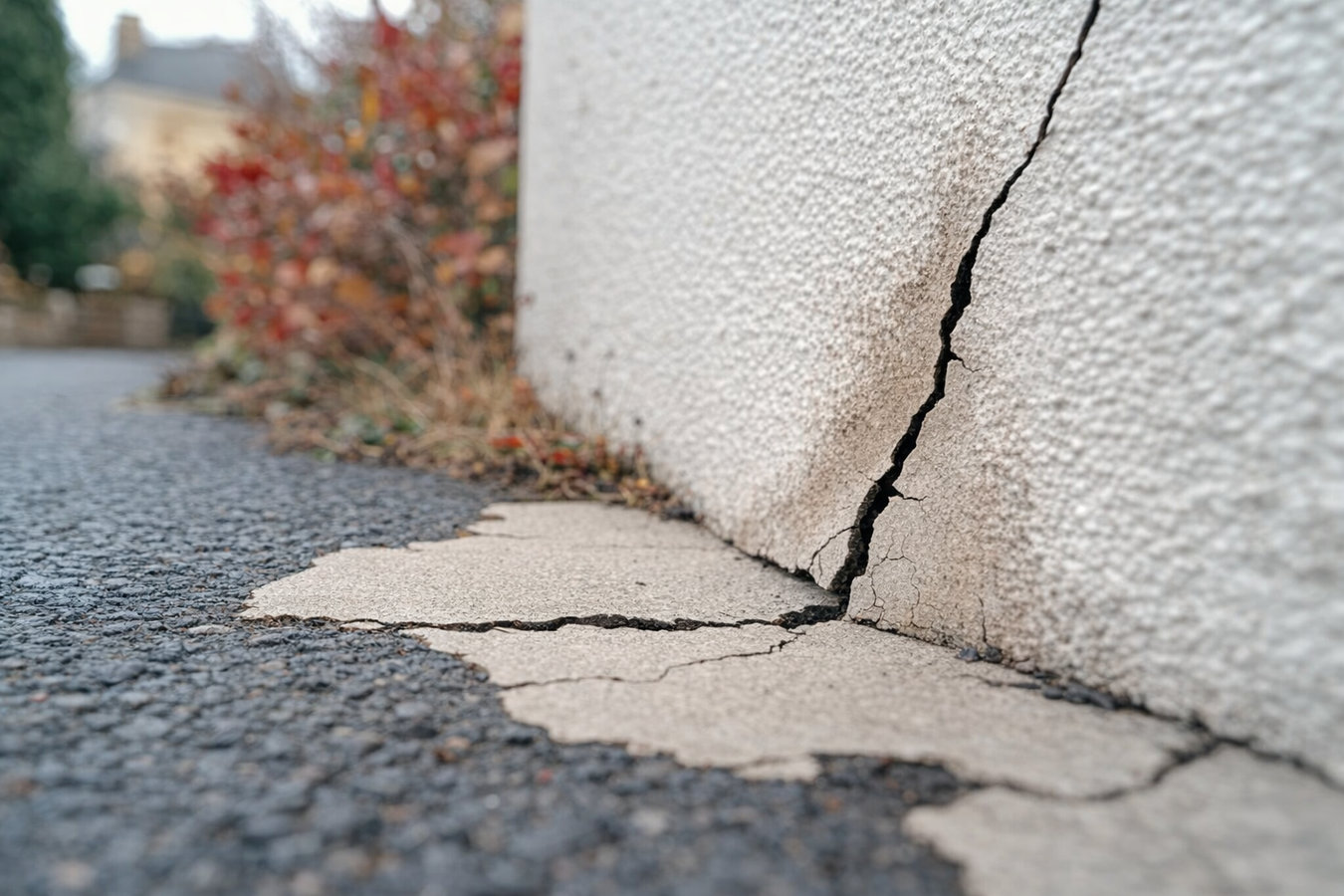
A sunken slab is a safety hazard and an eyesore. We lift it back to level the same day using proven methods, and we address what caused it to sink so it stays that way.
Foundation raising in Lafayette lifts sunken concrete slabs back to their original position by pumping material beneath them through small drilled holes - most residential jobs are completed in two to six hours, and you can typically walk on the repaired surface the same day.
When the soil beneath a concrete slab shifts, washes away, or compresses, the slab drops - but the concrete itself is often still in good shape. Foundation raising solves the problem without the cost and disruption of full replacement. Lafayette homeowners deal with this more than most, because the clay-heavy glacial soils in Tippecanoe County expand and contract with every wet season and dry spell, creating voids that send slabs downward. If the slab is badly broken beyond just settling, we also handle slab foundation building as a complete replacement option.
The American Concrete Institute notes that slab lifting is a well-established repair method when the concrete itself remains structurally sound. We assess that before recommending a method, so you get the right fix - not the most expensive one.
These are the signs Lafayette homeowners notice most often before calling us.
If one side of your driveway, patio, sidewalk, or garage floor sits lower than the other, the soil underneath has shifted. You might notice water pooling where it used to drain fine, or a gap opening between the slab and your house. This is one of the most common things Lafayette homeowners see after a wet spring or hard winter.
When the edge of one concrete section has risen or dropped relative to the one next to it, you feel it when you walk across the seam - a bump or step-down that was not there before. This is a safety issue, especially for older family members, and one of the most common reasons people call a concrete contractor in Lafayette.
Ground movement beneath your home can cause the frame to shift slightly, and doors and windows are often the first sign. If a door that used to swing freely now drags or will not latch, it is worth having a contractor look at the slab. In Lafayette, this symptom tends to show up in spring after the ground has thawed and resettled.
Small hairline cracks in older concrete are normal, but cracks that are widening, have a raised lip on one side, or are getting longer over time are a sign that one section has dropped relative to another. In Lafayette, the clay soil and freeze-thaw cycles are the usual culprits, and waiting makes the gap worse.
We raise sunken slabs on driveways, patios, garage floors, sidewalks, basement floors, pool decks, and front steps throughout the Lafayette area. The two main methods are mudjacking, which pumps a cement-and-soil slurry beneath the slab, and polyurethane foam injection, which uses a lightweight expanding foam that cures quickly and leaves smaller drill holes. Mudjacking has been used for decades and is typically the more affordable option. Foam is lighter, does not absorb water, and is often the better long-term choice for problem areas near the Wabash River floodplain where drainage issues are persistent. For slabs that are too far gone to raise, we also offer full slab foundation building to replace what cannot be saved.
Before we recommend any method, we walk the area with you and look at the slab, the surrounding drainage, and what caused the settling in the first place. In Lafayette, that cause is almost always clay soil movement, freeze-thaw cycles, or water erosion - and lifting the slab without addressing the root issue means it will sink again. Every job includes an honest assessment of both the concrete and the conditions underneath it. If your project also involves steps or a sidewalk leading up to the house, we handle concrete cutting as part of any repair that requires removing a damaged section before re-leveling.
For homeowners who want a proven, budget-friendly method to lift driveways, patios, and sidewalks using a cement-soil slurry pumped beneath the slab.
For areas prone to moisture or where a lighter, faster-curing material is preferred - ideal for garage floors, pool decks, and slabs near drainage problem zones.
For slabs that have not yet visibly sunk but have hollow spots underneath that will eventually cause settlement if left untreated.
For front porch steps and stoops that have separated from the house or tilted, creating a gap or trip hazard at the entry to your home.
Tippecanoe County sits on glacially deposited soils with a high clay content. Clay expands when it gets wet and shrinks when it dries out - and that repeated swelling and shrinking is one of the most common reasons concrete slabs sink here. Lafayette winters regularly push temperatures well below freezing, which means the ground goes through many freeze-thaw cycles each year. When water in the ground freezes, it expands and can push slabs upward. When it thaws, the soil can shift or wash away, leaving voids beneath the concrete. Homeowners here often notice new settling in spring, right after the ground has come through a full winter. This is not a sign that your home was built poorly - it is just the nature of building on Indiana soil.
Parts of Lafayette near the Wabash River and in lower-lying neighborhoods have drainage patterns that make slab settling more likely. Water that pools near a foundation after heavy rain slowly erodes the soil underneath, and any lifting repair will last longer if that drainage issue is fixed at the same time. Many of Lafayette's older neighborhoods - including areas near downtown that were developed in the mid-20th century - have homes where the original slabs were poured over soil that was not compacted to modern standards. Homeowners in West Lafayette and Frankfort face the same soil and climate conditions, and foundation settling is equally common across our entire service area.
Here is exactly what the process looks like from first call to finished repair.
Tell us what you are seeing - where the slab is, how much it has dropped, and how long it has been that way. We respond within one business day and schedule a free on-site visit.
We walk the area with you, measure the drop, check for drainage issues, and give you a written estimate. We will tell you honestly whether raising or full replacement is the right call for your slab.
For structural slab work in Lafayette, we pull the required permit through the City of Lafayette Building and Planning Department before work begins. Once the permit is in hand, we schedule your job and confirm the date.
The crew drills small holes, pumps the lifting material, watches the slab rise to level, and patches the holes before leaving. Most jobs are done in a few hours, and you can walk on the surface the same day.
Free estimate. No obligation. We respond within one business day.
(765) 637-2109Lifting a slab without fixing the drainage or soil issue that caused it to sink means it will sink again. We look at both the concrete and what is happening underneath before we recommend anything, so the repair holds through Indiana winters.
We raise foundations across Lafayette, West Lafayette, Frankfort, Crawfordsville, and 8 additional communities in our service area. That regional experience means we understand how local soil and drainage conditions vary from one neighborhood to the next.
The number on your estimate is the number you pay. We explain the method, the material, and the reasoning before any work begins. No surprises on the invoice, and no pressure to choose the more expensive option if it is not the right one for your situation.
Structural slab work in Lafayette requires a permit through the City of Lafayette Building and Planning Department. We pull it for you before work begins. The Concrete Foundations Association recommends permitted work for exactly this reason - it protects your investment and your home's resale value.
Foundation settling in Lafayette is not a rare problem - it is a predictable result of the soil and climate here. That means local contractors who have done this work for years know exactly what to look for and how to fix it in a way that lasts.
When a slab section is too damaged to raise, precise cutting removes it cleanly so it can be replaced with new concrete.
Learn moreFor slabs that have settled beyond repair, we pour a new concrete slab from the ground up with proper base preparation.
Learn moreLafayette's freeze-thaw season makes settling worse every winter - call today and we will assess your slab before the damage deepens.